Munich, Germany
- Michelle M.
- Aug 22, 2022
- 3 min read


During the Middle Ages, markets and tournaments were held in the Marienplatz, which was originally called Markth ("market"), Schranne ("grain market") and later Schrannenplatz ("grain market square"). After said grain market was moved into the modern glass-and-iron Schranne near "Blumenstrasse" in 1853, the square received its new name, starting 9 October 1854.

Marienplatz was named after the Mariensäule, a Marian column erected in its centre in 1638 to celebrate the end of Swedish occupation. Today the Marienplatz is dominated by the New City Hall (Neues Rathaus) on the north side, and the Old City Hall (Altes Rathaus, a reconstructed gothic council hall with a ballroom and tower) on the east side.
The Glockenspiel in the tower of the new city hall was inspired by the tournaments that were held in the square during the Middle Ages, and draws millions of tourists a year. Furthermore, the pedestrian zone between Karlsplatz and Marienplatz is a crowded area with numerous shops and restaurants
The Mariensäule is a Marian column located on the Marienplatz in Munich, Germany. Mary is revered here as Patrona Bavariae (Latin: Protector of Bavaria). It was erected in 1638 to celebrate the end of Swedish occupation during the Thirty Years' War, following a respective vow by Duke Elector Maximilian I of Bavaria if the ducal residential cities of Munich and Landshut were spared from war destruction. The column is topped by a golden statue of the Virgin Mary standing on a crescent moon as the Queen of Heaven, created in 1590. The figure was originally located in the Frauenkirche. Mariensäule in Munich was the first column of this type built north of the Alps and inspired the construction of other Marian columns in this part of Europe.

The Munich Residence served as the seat of government and residence of the Bavarian dukes, electors and kings from 1508 to 1918. What began in 1385 as a castle in the north-eastern corner of the city (the Neuveste, or new citadel), was transformed by the rulers over the centuries into a magnificent palace, its buildings and gardens extending further and further into the town.
The rooms and art collections spanning a period that begins with the Renaissance, and extends via the early Baroque and Rococo epochs to Neoclassicism, bear witness to the discriminating taste and the political ambition of the Wittelsbach dynasty.
Much of the Residence was destroyed during the Second World War, and from 1945 it was gradually reconstructed. Today, with the museums of the Bavarian Palace Administration (the Residence Museum itself, the Treasury and the Cuvilliés Theatre) along with other cultural institutions, this is one of the largest museum complexes in Bavaria.
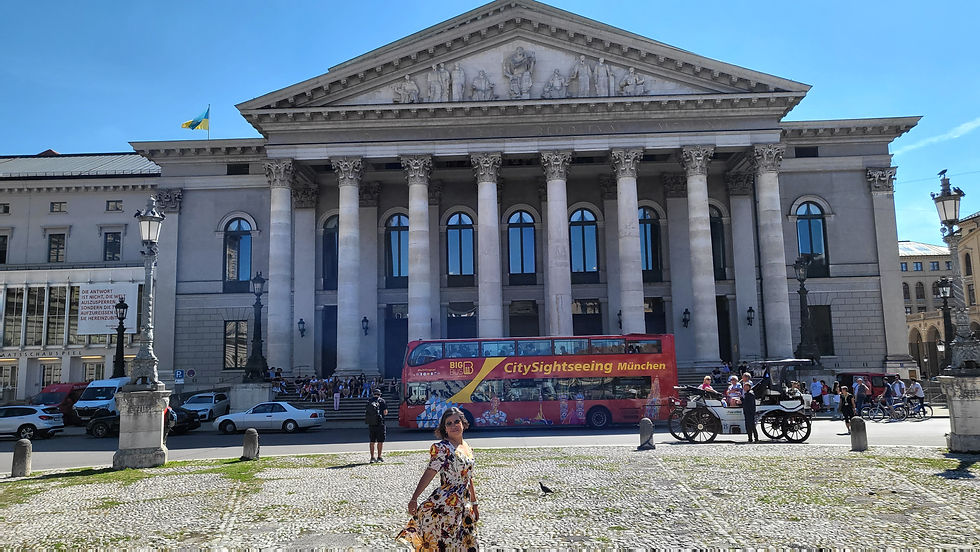
Art Museums in the Kunstareal District.
Königsplatz was laid out in Neoclassical style in 1862, and in the art district around it, you'll find one of the finest groups of art museums anywhere in Europe. First are the three Pinakothek art galleries: the Old Picture Gallery (Alte Pinakothek), with its fine collections of Dutch, Flemish, Italian, French, German, Spanish, and medieval paintings; the New Picture Gallery (Neue Pinakothek), with its displays of art ranging from Rococo to Art Nouveau; and the State Gallery of Modern Art (Pinakothek der Moderne), which includes works by Picasso and Warhol.
Other museums of note are the Glyptothek and the State Antiquities Collection (Staatliche Antikensammlung), with their large compilations of ancient sculptures and antiquities.
The latest addition to this treasury of art is Lenbachhaus, an Italianate villa that was the home and studio of artist Franz von Lenbach. The villa and its new extension house the world's foremost collection of works by the Blue Rider movement, a group of Expressionist painters led by Wassily Kandinsky and Franz Marc.
Address: Königsplatz 1, 80333 München

The Theatine Church of St. Cajetan
The Theatine Church of St. Cajetan (Theatinerkirche St. Kajetan), a basilica built in the style of the Italian High Baroque, was completed in 1690, with a stunning façade, twin towers, a massive 71-meter-high dome, and richly decorated interior. Exterior highlights include numerous marble statues of saints and the lantern with a lion weathervane atop the dome.
The interior, dominated by the tall round-headed arches of the barrel vaulting and the dome over the crossing, is washed in white, with rich stucco ornamentation. Other interior highlights include the high altar, with its picture of The Virgin Enthroned with Angels from 1646 by Caspar de Crayer (a pupil of Rubens), and the Altar of the Virgin, with a painting of the Holy Kinship from 1676. In the Ducal Burial Vault, you'll see the tombs of members of the House of Wittelsbach, long-time rulers of Bavaria.
Address: Salvatorplatz 2a, 80333 München

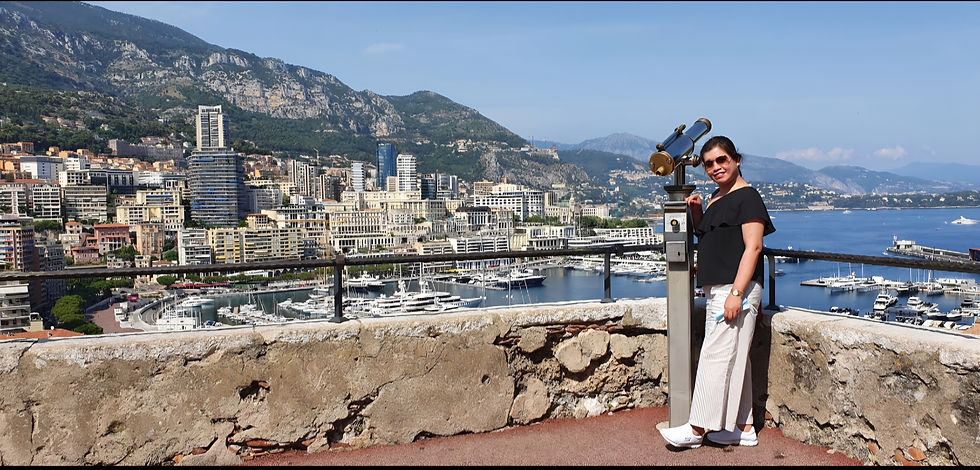


BMW Welt & Museum for car lovers, this futuristic "temple" to automotive engineering is a must-visit.
Viktualienmarkt a daily food market where you can get everything from local white sausage (Weisswurst) to exotic fruits.
Can I add on the Beer Gardens May is peak beer garden season. If the sun is out, locals head to places like Hirschgarten or Augustiner-Keller.
They have also Deutsches Museum the world's largest museum of science and technology—it's located on its own island in the Isar river.
They have also a contemporary art festival starts tomorrow, opening dozens of galleries and museums for specialized exhibitions.